

In summary, unearned revenue is a vital concept within accrual accounting, helping provide a more accurate representation of a company’s financial position. By understanding and accurately recording unearned revenue, businesses can better manage cash flow and service obligations to their customers. The proper management of unearned revenue is crucial for maintaining accurate financial records. It helps in matching revenues with expenses in the correct accounting periods, which is a fundamental principle of accrual accounting. This practice not only ensures compliance with accounting standards but also provides a clear picture of the company’s financial health to stakeholders. Proper treatment of unearned revenue is crucial for accurate financial reporting.
A few practical things to know about deferred revenue

The company classifies the revenue as a short-term liability, meaning it expects the amount to be paid over one year for services to be provided over the same period. Like small businesses, larger companies can benefit from the cash flow of unearned revenue to pay Accounting for Technology Companies for daily business operations. Securities and Exchange Commission (SEC) sets additional guidelines that public companies must follow to recognize revenue as earned. A business generates unearned revenue when a customer pays for a good or service that has yet to be provided. The unearned revenue is usually a current liability unless prepayment has been received for the supply of goods or services after a year.
Because it’s technically money you owe your customers

Creating and adjusting journal entries for unearned revenue will be easier if your business uses the accrual accounting method, of which the revenue recognition principle is a cornerstone. When a customer prepays for a service, your business will need to adjust the unearned revenue balance sheet and journal entries. Your business will need to credit one account and debit another account with corresponding amounts, using the double-entry accounting method to do so.
It’s crucial to understanding your company’s cash flows
Proper treatment of unearned revenue is crucial for maintaining transparency and accuracy in financial statements. Mismanagement or incorrect reporting can lead to misstated earnings, which can mislead investors and stakeholders about the companys performance. Therefore, businesses must implement robust accounting practices to monitor and account for unearned revenue effectively. Under this method, when the business receives deferred Revenue, a liability account is created. The basic premise behind using the liability method for reporting unearned sales is that the amount is yet to be earned. Till that time, the business should report the unearned revenue as a liability.
- Our team is ready to learn about your business and guide you to the right solution.
- However, if the unearned is not expected to be realized as actual sales, then it can be reported as a long-term liability.
- Recognizing unearned revenue as a liability helps maintain the integrity of financial reporting and ensures compliance with accounting standards.
- Unearned revenue is recorded as a credit to the unearned revenue account, which is a liability account.
Unearned revenue is recognized as a current liability for the seller’s accounting records, as the revenue is not yet earned because the good or service hasn’t been delivered. It is a category of accrual under which the company receives cash before it provides goods or renders services. Under this, the exchange happens before actual goods or service delivery, and as such, no revenue is recorded by the company.
- Funds in an unearned revenue account are classified as a current liability, in other words, a debt owed by a business to a customer.
- By understanding and accurately recording unearned revenue, businesses can better manage cash flow and service obligations to their customers.
- Then, on February 28th, when you receive the cash, you credit accounts receivable to decrease its value while debiting the cash account to show that you have received the cash.
- On 30 December 2018, ABC Co. received $1,000 as a payment in advance from its client for a consulting service that it will provide from 02 Jan 2019 to 08 Jan 2019.
- As such, the Unearned Revenue is a Liability till the time it doesn’t completely fulfill the same, and the amount gets reduced proportionally as the business is providing the service.
- By employing effective cash management strategies and robust risk assessment techniques, companies can navigate the intricacies of unearned revenue management.
Journal entry required to recognize revenue at the end of each match:
Media companies like magazine publishers often generate unearned revenue as a result of their business models. For example, the publisher retained earnings needs the cash flow to produce content through its various teams, market the content compelling to reach its audience, and print and distribute issues upon publication. Each activity in a publisher’s business strategy can benefit from the resulting cash flow of unearned revenue. However, unbilled revenues, the goods or services are already provided or delivered to the customers, but the company has not yet bill or issue invoices to the customers. Unearned revenue is mostly common in companies that provide subscription-based services to their customers.
- Called deferred revenue, this approach ensures financial statements accurately reflect what the company owes and what it has genuinely earned.
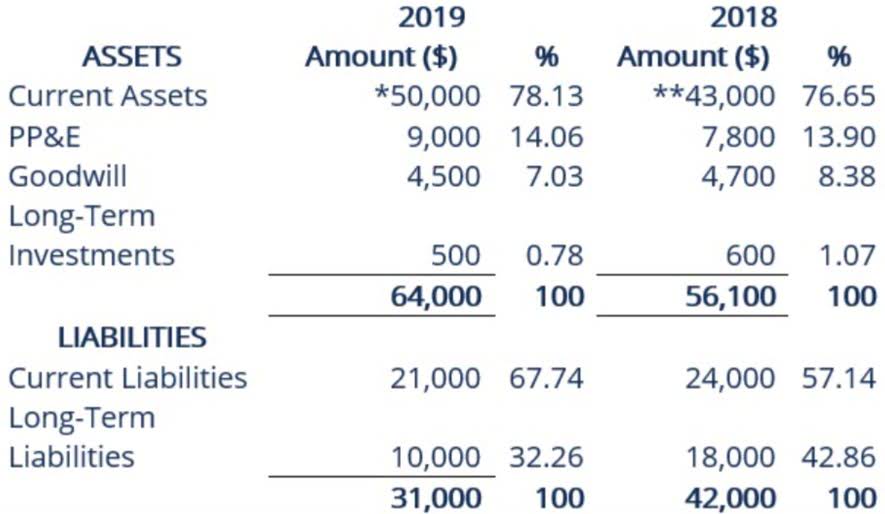
- As you can see, the unearned revenue will appear on the right-hand side of the balance sheet in the current liabilities column.
- Therefore, applying accrual accounting principles and using unearned revenue as a liability rather than income becomes more of a responsibility than a choice.
- This deferring of revenue to the periods in which it is earned will often be recorded by using the liability account Deferred Revenues.
- Companies such as Ticketmaster, a subsidiary of Live Nation Entertainment, Inc. (LYV), often sell tickets for events like concerts or sports games months in advance.
What Is Unearned Revenue? A Definition and Examples for Small Businesses
This ensures that the revenue recognition aligns with the performance obligations of the business. Unearned revenue, also known as deferred revenue, represents payments received by a business unearned revenues are for goods or services yet to be delivered or performed. It is recorded as a liability on the balance sheet because it reflects an obligation to the customer. This accounting treatment ensures that revenue is recognized in the period when the service is actually provided, adhering to the revenue recognition principle. Recording unearned revenue involves debiting the cash account and crediting the unearned revenue account.
Unearned Revenue in Accounting: Proper Treatment of Advance Customer Payments
Unearned revenues are recognized as the liability account in the current liability section of the balance sheet in the financial statements. This will debit the unearned revenue liability account and credit the revenue earned account in the income statement. In this journal entry, the $4,500 is recorded as a liability because the company ABC Ltd. has the performance obligation to provide the service to its client in the next three months.